

Adrianne is a Senior Admissions Counselor and TV/film director, producer, writer, and actress currently based in LA. She uses her experience in multiple disciplines to help students achieve their personal and academic goals.
If you’re applying to college, you might’ve seen some schools asking for a video supplement as a way to get to know an applicant better. Curious how to make a standout application video? We’ve got you covered.
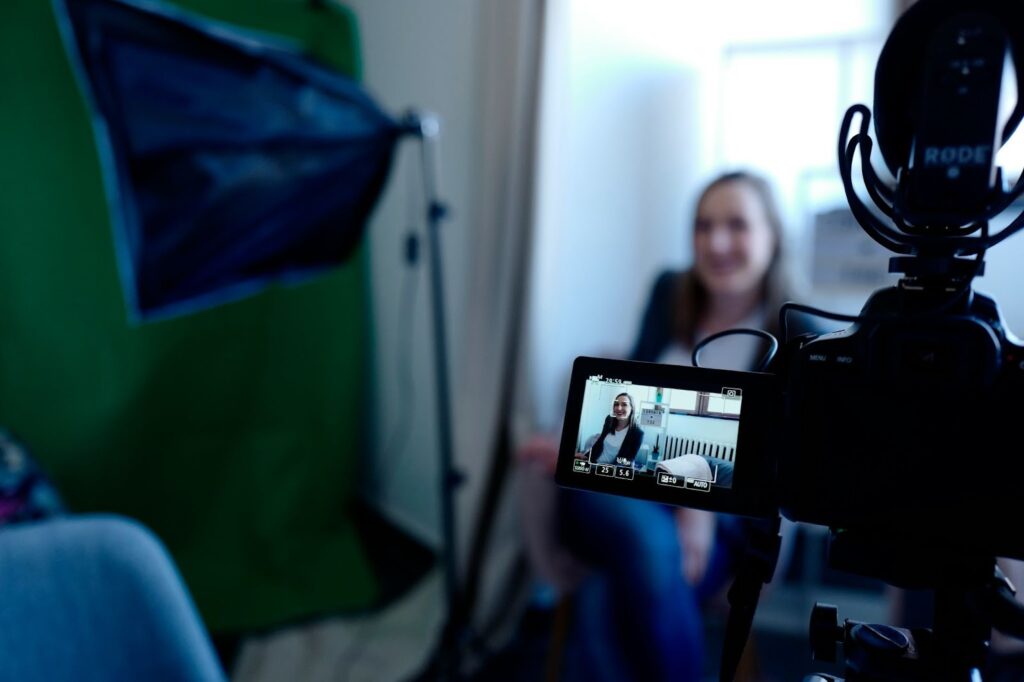
Table of Contents
Introduction
College applications have many different elements, from essays to letters of recommendation to grades to activity lists. However, there’s an increasingly popular optional element that many students include in their applications: video supplements.
This can take many different forms, from a one-take, minute-long video just talking directly to the camera to a more edited and polished video covering multiple facets of a student’s interests and personality. Many of them have a “choose your own adventure” vibe, allowing students whose preferred medium of expression is through video editing and production to shine. Even if you’re not well-versed in video production, though, you can still use the video supplement to help your application stand out.
So, what is the purpose of a video in your college application, and how can you create a video that will help you stand out from the crowd? We’ve got you covered — read on for our breakdown of the college application video supplement.
What Is a College Application Video?
What exactly an application video entails depends on the school to which you’re applying. Some schools ask for a brief introduction of who you are and your passions, and other schools leave it very open-ended, allowing you to take it in whichever creative direction you prefer.
Of course, students can also include a video of a previous performance as part of an art portfolio, but that’s not exactly what we’re covering here — you can read our insight into how to create your art portfolio here. This is more of the intro/personality video that schools give you the options to include.
Many schools use a platform called Glimpse by InitialView, which requires you to record the video in one take that lasts 60-90 seconds, which eliminates the need for further editing or planning. Once you’re happy with a take, you can send it to your counselor to review and then send it off to several colleges at once. These videos, by the very nature of their creation, should feel more organic, even though you could still script and plan before recording.
Then, there are the more open-ended video prompt instructions. Some examples include:
- Brown University (Video Introduction): “Brown encourages applicants to submit a brief personal video introduction (no more than 90 seconds) as an additional component of their application. We believe this approach ensures equity across our applicant pool. The video introduction gives you an opportunity to tell us more about yourself, in your voice, beyond the information you provided in your application. This personal video is a helpful way to show us who you are and why you are interested in attending Brown.”
- They do include some ideas for more specific prompts, but it’s still a choose-your-own-adventure thing. Very on brand for Brown!
- And you could also submit a Glimpse or InitialView interview if you prefer.
- University of Chicago (Recommended Video Profile): “If you would like to add your voice to your application, you have the option to submit a two-minute video introduction in lieu of the traditional college interview, which is not part of our application process. Your recording does not need to be extensively rehearsed or polished, and the video does not need to be edited.”
- As mentioned in the prompt, UChicago does not offer undergraduate applicants interviews, so this is your only chance for any “face time” with someone associated with admissions.
- Bowdoin College (Optional Video Response: “Bowdoin offers applicants the option to record a short, spontaneous video response to supplement their application materials. The video response is completely optional and affords you the opportunity to add a different dimension to your application.”
- Bowdoin emphasizes that they don’t require preparation, studying, or editing — while film editing enthusiasts might opt to go for something more produced, you shouldn’t feel pressured to go for high production value. Instead, focus on showcasing your authentic personality.
When and Why You Might Submit a Video
As you can see in many colleges’ video intro prompts, this is usually a completely optional part of the process, and it’s emphasized that a high production value isn’t required (which makes sense, unless you’re applying for film school!). But it does allow you to be creative or, at the very least, put a face to your name. In short, it’s an opportunity to be memorable, and those kinds of opportunities can be in short supply during the college application process.
Even if it’s optional, especially if you are applying to a highly competitive school, we’d strongly recommend that you submit a video. Even if it’s a simple Glimpse video introduction that you record in your bedroom, it can add a new dimension to your application and make your profile stand out. If you feel like other parts of your application aren’t as strong as you’d like (i.e., you didn’t submit test scores or your grades suffered a bit in one semester), this could give you the “likable” factor that brings your application back into the conversation. Of course, “likability” is very subjective, but you never know — and in a selective college application process, you should take every opportunity you get for positive facetime.
Planning Your College Application Video
As you might assume, the planning process for your college application video essay will depend on the type of video the school(s) in question are asking for. With that in mind, some good steps for planning include:
- Reading the prompt and/or instructions strategically. Students should pay close attention to the language of the prompt, especially action words like “introduce,” “share,” “reflect,” or “show.” These words signal what the admissions office actually wants to see. Students should also note any time limits or format guidelines and consider what the prompt permits them to reveal about themselves. Watch example videos if available, but don’t copy a particularly creative format if it’s not yours.
- Choose one clear takeaway. Effective videos leave the viewer with one strong impression. Students should decide what they want an admissions officer to remember about them after watching the video and plan everything around that idea. Adhere to your student brand conveyed by the rest of your application.
- Outline instead of scripting. For students talking directly to the camera and foregoing more complicated editing, plan a loose structure rather than writing a word-for-word script. A simple outline with an opening, a main idea, and a closing reflection helps keep the video focused while allowing the student to sound natural. Memorized scripts often come across as stiff, whereas an outline encourages conversational delivery and genuine presence. Don’t read off a script if you can help it. If a joke or fun (but appropriate) idea comes up while recording, use it!
- Plan for time and edit thoughtfully. Practice once or twice with a timer to make sure their content fits comfortably within the time limit. Identify which parts are essential and which can be cut if needed. Clear, confident communication is more effective than trying to squeeze in too much information at the last second. If you’re able to edit, try not to make the video too overly polished or lose that authentic feel.
Tips for Recording a High-Quality College Video Essay
As mentioned above, you by no means need Hollywood-level production quality for a college admissions video, but there are some simple things to keep in mind when filming.
- Film in a clean, visually appealing environment. You can film in your room, but make sure you pick up dirty clothes off the floor! Bonus points if you choose an environment that can also give us a sense of your personality — maybe your paintings or medals are on the wall behind you.
- Minimize background noise and distractions. Use a microphone if you can, but if not, make sure you sit close to the phone or camera to capture audio as best as possible.
- Be mindful of your body language and speaking cadence. Imagine you’re in an in-person interview. How would you conduct yourself?
- Opt for the best visual quality you can find. You can definitely film on your phone, so don’t feel the need to get a fancy camera. But if you’re able to get an upgraded phone from a parent or friend or get a camera from your school, it couldn’t hurt.

Editing and Final Touches
For a simple self-introduction video, based on how you record it, you’ll probably need minimal editing. In fact, the video can get distracting with multiple cuts and takes stitched together, and your message could get lost in the mix. Or, for a Glimpse video, you won’t even have the option to edit at all, so there’s no need to worry about it.
If you’re going a more creative route or opting for a longer video, then you’ll need more advanced video editing tools and a plan going into filming (especially if your interest is actually video production). What the editing actually looks like is up to your creative discretion — just make sure the content of the video isn’t lost in the process.
Common Mistakes to Avoid
When writing the script for your college application video, avoid some common mistakes. Don’t repeat your resume or activities list, and don’t paraphrase your Common App personal statement. Even if you still have the same student brand, you can still add a new perspective to an already cohesive portfolio. This new medium gives you the room to do that.
Don’t try to be too “impressive” by using a more advanced vocabulary than what is already comfortable to you. However, you should also avoid saying anything potentially offensive or too casual. This is not an acting self-tape, so don’t try to seem overly earnest in a way that feels inauthentic to you. Don’t overdo the effects or add filters unless you have a very, very clear creative reason to do so — and even then. And don’t sell yourself short either! Don’t apologize or undercut your own statements. This is your time to shine.
Submitting Your College Video Supplement
When it comes to actually submitting your video essay, refer to the college’s instructions and follow them diligently. Sometimes they want a link, other times you’ll submit to a portal or via a different video platform, such as the InitialView platform. And before you submit, watch through a few times while cross-referencing the guidelines provided to you.
Also, note the deadline for video submissions. Oftentimes, schools will allow you a few more days to finish your admissions video application, since they’re usually not viewing them immediately. But refer to the school’s admissions page — double and triple check just to make sure!
Bonus Tips: Making Your Video Stand Out
Still looking for tips to help your video content stand out? No worries — we’ve got you!
- Use a catchy hook, like you would with a written essay. Opening with “Hi, my name is…” is fine, but starting with a concrete moment, image, or line of thought immediately pulls the viewer in. You also have the benefit of actual visual imagery at your disposal. Use it to your advantage!
- Let your environment do quiet storytelling. As briefly mentioned above, your environment contributes to your image, so opt for something more creative than a blank wall if you can. As long as it doesn’t detrimentally affect the video quality, it will help paint a clearer picture of who you are.
- Allow small, human pauses, and let your natural voice come through. Many admissions websites mention that admissions officers don’t care as much about “ums” as you might think. Perfectly polished delivery can feel rehearsed. Brief pauses, natural pacing, or a moment of thoughtfulness can make the video feel like a real conversation.
Conclusion
Don’t be too intimidated by the prospect of this video essay or video interview — have fun with it, and your viewer will enjoy it. This isn’t as big an element of your application as your personal statement or grades, but it can make a difference if you let your creativity shine through. Remember that there is another person on the other side of your application who just wants to connect with you. Make the most of this opportunity!