

Adrianne is a Senior Admissions Counselor and TV/film director, producer, writer, and actress currently based in LA. She uses her experience in multiple disciplines to help students achieve their personal and academic goals.
Since early action decisions have been released and most regular decision applications have been submitted, it’s time to review the trends in college admissions and re-evaluate the landscape of higher education.

Table of Contents
Introduction
The path to higher education is more intricate and dynamic than ever before, which means students need to pay attention to trends in the college admissions landscape. As universities adapt to a changing world, prospective students must also change approach their college admissions journey.
Gone are the days of a simple formula for acceptance; today’s landscape is shaped by evolving testing policies, intensified competition, a renewed focus on authentic self-representation, shifting geographic preferences, and financial considerations. And the college applications season isn’t officially over yet!
So, here are all of the trends that have emerged after the early application round and will likely continue into regular decision and the next college admissions cycle.
The Evolving Role of Standardized Testing
One of the biggest questions for us college counselors this year is whether or not to submit test scores to test-optional schools, and the answer is more complex and personalized than can be addressed here. Test-optional policies were introduced in the post-COVID admissions era, given the challenge of administering these tests during the pandemic. Since many of these policies have now been around for more than a few years at this point, it’s clearer what decision actually benefits students.
However, we also saw many schools rolling back their test-optional policies that were introduced during the COVID admissions era. Ivies like Brown, Harvard, and Cornell are now reinstating their standardized test requirements within the next two admissions cycles, and many other schools are following suit. It’s also been shown that submitting test scores, even when applying to colleges that are still test-optional, is still a wise decision for most students.
Still, the reasons for the rollbacks at test-optional schools vary widely. The College Board, which administers the SAT and AP tests, argues that standardized tests measure academic preparedness for college and should be an important part of any application evaluation. But at competitive colleges, admissions committees found that test-optional admissions created a new kind of unfairness, since there wasn’t an apparent alternative that could fill the same role in the college admissions process.
Want a full breakdown of the current state of standardized testing? Read our recent update on test-optional policies here.
The Role of New Technology
Artificial Intelligence
We wrote in the college admissions trends recap from 2025 that admissions offices are now using AI to review student applications (or at least a portion of the applications). To recap, a recent report from Acuity Insights highlighted the popularity of this shift: “51% of admissions professionals believe AI will transform applicant evaluation, improving efficiency while maintaining holistic review standards.” As is the case with all AI-centered discussions, there are pros and cons to this potential shift.
Especially at schools where admissions officers are overwhelmed with applications, this could ideally give admissions officers more time to review each application, as opposed to the average 5-15 minutes (usually less than 8 minutes at very selective colleges) that they now allot to each student. That could benefit students with more complicated circumstances or maybe a quantitative profile (i.e., test scores and GPA) below that of the school’s median applicant, since it would generate more discussion time amongst admissions committees.
However, this could also create a new barrier to entry for students and somewhat replace standardized test scores as a kind of benchmark against which admissions officers can measure students. For instance, an AI model could quickly summarize and highlight impressive accomplishments on a student’s already concise application, which would benefit students who are affiliated with the most prestigious extracurriculars and contests (i.e., Google Science Fair, Johns Hopkins Center for Talented Youth).
For students who have a lower-profile extracurricular portfolio, such as a student who founded their own business or was dedicated to a local community service organization, the AI model may not place that accomplishment on par with a more recognizable name. Students who might know how to tailor their language to fit the specific AI model an admissions office is using would have the upper hand. This is all speculation and generalization at the moment since admissions offices haven’t clarified exactly how they’d use AI programs, but it’s a logical guess given the current technology.
On the student AI usage front, more and more admissions offices are using AI recognition software for any incoming essays and have included explicit instructions not to use AI in the creation of any part of the application. Any student applying should not take this lightly — steer clear of AI usage, even if there’s a gray area. Admissions officers can spot it from a mile away at this point!
Social Media
Social media’s role in the college admissions process is by no means new, but as the platforms change, so does the part they play in students’ applications. Nowadays, it’s not that uncommon for students to be influencers or for them to have curated an audience based on a page centered around their hobbies, travels, or other interests. These types of pages, if significant enough in size and quality, can certainly be included on students’ activities list, especially if these pages have now been used as a business venture or helped a student gain exposure.
Many parents are especially concerned with admissions officers reviewing students’ social media pages. While it does happen, especially with athletes or with anyone possibly embroiled in a larger controversy (remember, admissions officers are also people with social media pages!), unless a student is consistently posting concerning, graphic, and/or offensive content, it’s not likely to matter much. Of course, be careful, college applications or not, but admissions officers are already running out of time to review applications as is.
Emphasis on Holistic Review and Authentic Storytelling
Given the prevalence of AI and the lack of standardized testing, truly authentic and unique storytelling stands out in the college admissions process like never before. Plus, schools that practice holistic review (which is most schools at this point) are looking beyond GPA and test scores to evaluate the entirety of an applicant’s profile, seeking to understand their character, potential, and fit within the university community.
This is good for students who can approach the college application process creatively and stand out in their essay writing and/or video component of their applications. More than ever, admissions officers want to see a real person behind the list of achievements and awards and add a new and exciting voice to the university community. They also want to see students who take initiative on a larger scale than just being a club president (not that that’s not impressive) — they want to see students who identify problems in their community and build a project around addressing those issues.
Increased Competition in the Early Application Round
Universities across the country are reporting significant surges in the number of applications they receive each admissions cycle, especially in the early rounds. This trend contributes directly to declining acceptance rates, particularly in EA and ED pools, making admission to many institutions more challenging than ever before. For instance, early application numbers for the 2024-2025 admissions cycle saw early action applications up 17% and early decision applications up by 4%, according to CollegeData. This means that many students are taking the “apply early” advice to heart!
This doesn’t mean you shouldn’t apply early — in fact, it’s more important than ever that you do. It just means that it’s more important that your applications are as polished and put-together as possible. It also means that students applying early should be prepared if they’re deferred or even denied. If deferred, students should be ready to send substantial updates to their application and reaffirm their commitment to attending. If denied, they should still have a balanced college list that ensures they’ll have other opportunities at schools that are a great fit for their talents.
Broadening Geographical Horizons with the College List
Last year, we saw the introduction of the “new Ivies,” or the list of high-quality schools that are seeing higher application numbers since the eight Ivy League schools seem increasingly impossible for students to attain. These schools are seen positively by employers as well and can offer students comparable experiences, both during a student’s four years and post-graduation.
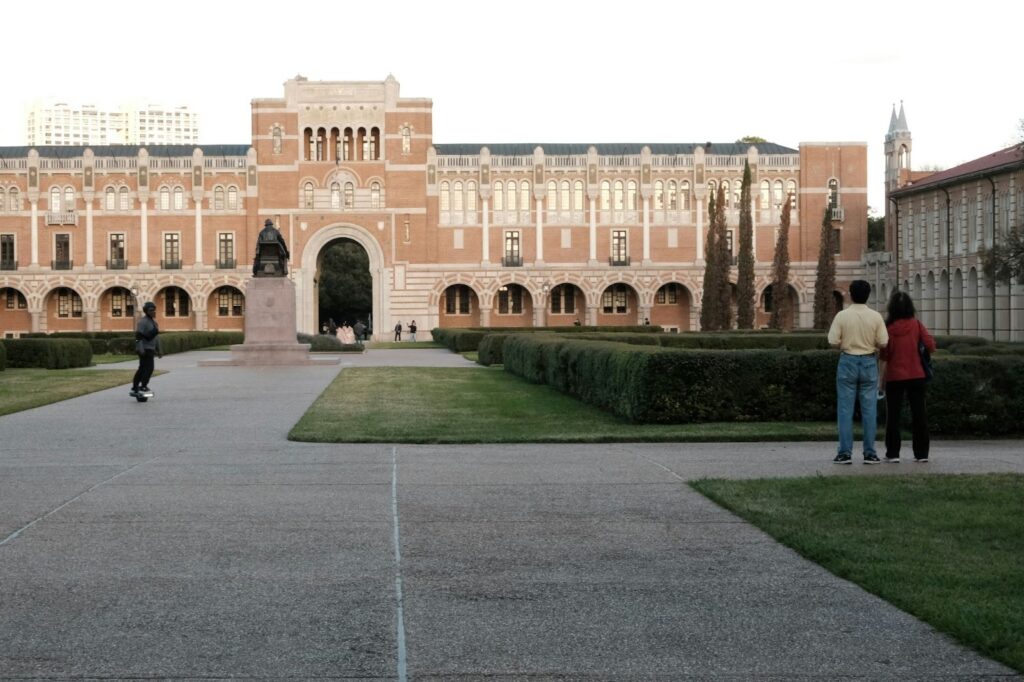
Following this trend, there has been a significant increase in applications and selectivity at universities located in the Southern United States. Institutions in states like North Carolina, Georgia, and Texas have seen a surge in interest, leading to more competitive admissions environments. Schools like UNC-Chapel Hill, Rice University, and Vanderbilt are seeing record-high numbers. This “Southern Surge” reflects a growing appeal of these regions for a variety of reasons, including economic growth, vibrant cultural scenes, and strong academic programs. These schools also offer competitive scholarship programs and can offer less of a financial burden to many students and their families.
So, if you’re applying in the 2026-2027 cycle, think bigger than just a name-brand school, and consider options that haven’t previously been on your radar. Need help building your college list? Check out our blog post on the topic.
Financial Concerns & Changes Throughout College Admissions
The escalating cost of higher education remains a significant concern for applicants and their families. Many are juggling financial aid, scholarships, and the overall value proposition of a degree, making them wonder: Are top colleges worth the cost anymore?
With the average sticker price for a year of college reaching approximately $29,900 at in-state public universities and $63,000 at private universities in 2024-2025, financial aid and scholarships have become critical factors for many applicants. Universities are increasingly recognizing the need to offer robust financial support to attract and retain a diverse student body, even those without the large financial endowments at Ivies and other top universities. Many students are opting for larger scholarships at less prestigious institutions as opposed to taking on a significant amount of debt after graduation to attend a name-brand school.
Additionally, new changes are coming to the federal student aid system, thanks to the One Big Beautiful Bill Act Congress passed last summer. According to The Columbus Dispatch, this bill included “extended tax breaks and an increase on some universities’ endowment taxes…[and] a slate of new provisions aimed at the federal student aid system. The changes could result in billions of dollars less in spending on student loans. Between new limits on how much graduate students can borrow in federal student loans and a consolidation of repayment plan options, college students and their families will have to navigate a still-uncertain landscape this year.” So, students and families who may be relying on the FAFSA and other forms of federally-controlled aid should stay clued into these developments, since it’s not yet clear how these changes will specifically take shape.
A Common Essay Prompt: Dealing with Disagreement
One of the most common topics in supplemental essays this year revolved around conflict, specifically how students have dealt with disagreements and/or differing viewpoints.
For instance, see these top universities’ prompts:
- Duke University: “Meaningful dialogue often involves respectful disagreement. Provide an example of a difference of opinion you’ve had with someone you care about. What did you learn from it?”
- New York University: “We are looking for students who want to be bridge builders—students who can connect people, groups, and ideas to span divides, foster understanding, and promote collaboration within a dynamic, interconnected, and vibrant global academic community. We are eager for you to tell us how your experiences have helped you understand what qualities and efforts are needed to bridge divides so that people can better learn and work together.”
- Yale University: “Reflect on a time you discussed an issue important to you with someone holding an opposing view. Why did you find the experience meaningful?”
These prompts aren’t new, but there was a significant increase in schools including these kinds of prompts as part of their supplemental essay options, as opposed to a standard “community” or “Why School” essay. This indicates that schools are looking for bridge builders in these divisive and fraught times who will not only become leaders in the school’s community but, hopefully, also go on to improve the university’s reputation on a global scale.
Conclusion
The college admissions process is undoubtedly more complex and competitive than ever, but it is also richer with opportunities for students to showcase their unique strengths and potential. If you can understand these trends in college admissions, you’ll be setting yourself up for success!
Do you need assistance with navigating this ever-changing college admissions landscape? Reach out to us today to schedule a free consultation!